What Goes Into The Price Of A Roof Replacement In Central Texas
The price of a roof replacement in Central Texas is a stack of smaller numbers, and a good quote shows you every one of them. Estate Roofing Solutions lays out each estimate line by line, so you can see where the money goes before the first shingle comes off.
A complete quote for a full roof replacement covers these items:
- Tear-off of the existing shingles, underlayment, and old fasteners
- Deck inspection and replacement of any damaged boards
- Underlayment, with ice and water membrane at valleys and eaves
- New flashing at chimneys, walls, valleys, and roof penetrations
- Pipe boots, vents, and ridge ventilation
- Shingles, starter strip, and ridge caps
- Permit, dumpster, hauling, and cleanup
- Workmanship and manufacturer warranty paperwork
Every roof is priced on its own size, pitch, and condition, which makes an inspection the way to get a real number for your house. The sections below explain how each item moves the total. A quote should also note which items are fixed and which depend on what the bare deck reveals, so a change on tear-off day never arrives as a surprise.
Tear-Off, Decking, And What The Old Roof Reveals
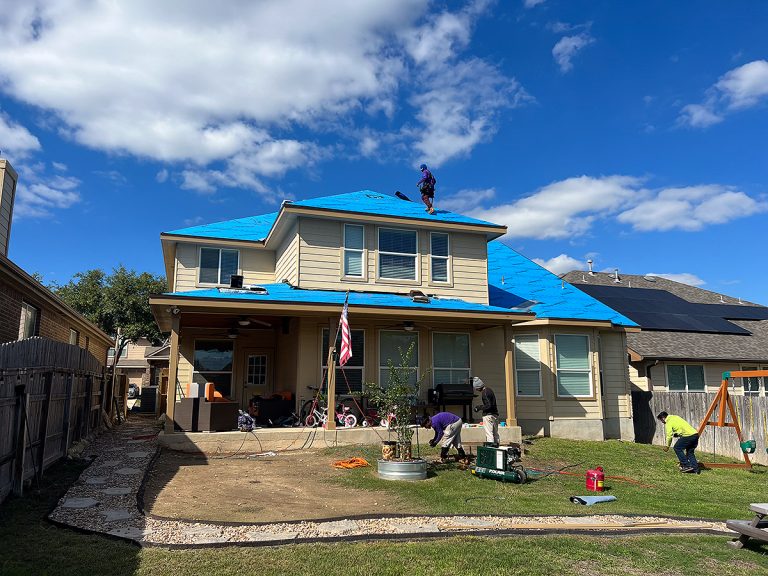
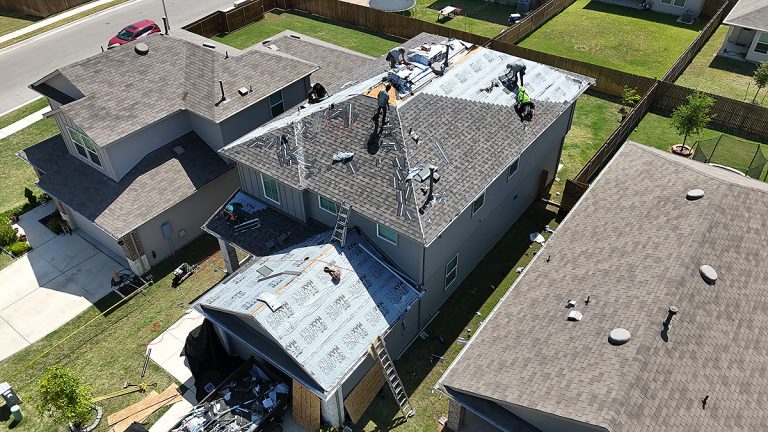
Every replacement starts with the old roof coming off: shingles, underlayment, drip edge fasteners, and sometimes a second layer left behind by an earlier repair that skipped the tear-off. A bare deck lets us check every board before anything new goes on, and it is the best look at a roof’s condition you will ever get.
Central Texas heat cycles a roof deck hard. The boards expand through a July afternoon and contract in a January cold snap, and years of that movement can leave soft spots around vents, valleys, and chimneys. Any decking that needs replacing adds material and labor, and the amount shows up once the old roof is off, so a good quote explains how those boards will be handled and priced. If you are still weighing replacement against repair, our list of 7 signs your roof needs immediate attention can help you sort that out first.
Shingle Choice And Underlayment
Shingle style and brand move the total, though labor and the roof’s own geometry carry more of it than the shingle wrapper does. Underlayment, ice and water membrane at valleys and eaves, and starter strip go into every job to protect against wind-driven rain. Our post on three-tab vs architectural shingles covers the shingle choice in detail.
Roof Pitch, Access, And Crew Size
Every residential roofing job has its own layout. A single-story roof with a gentle pitch and a driveway beside the house moves faster than a steep two-story roof tucked behind live oaks and a fence line. Steep pitch slows a crew for safety, and slower work adds labor hours. Access changes the math as well: when the dumpster and material trailer can park close, materials travel a short distance, and when they cannot, everything gets carried by hand. Tree cover over the roof adds cleanup time and sometimes a trimming visit before work starts.
Crew size sets the schedule. A larger crew shortens the calendar on a big roof, and a smaller crew suits a compact one, so the labor on your quote reflects the number of people the job needs and how many days they will be on site.
Permits, Code Items, And Ventilation
Depending on the city, a full replacement can require a permit and a final inspection before the job closes. Round Rock, Austin, and the other cities we serve each handle the paperwork a little differently, and we build the permit step into the schedule from day one.
Tear-off is also the right time to correct attic ventilation.
An attic that traps heat through August pushes shingle surface temperatures higher than they need to be, and balanced intake and exhaust helps a new roof reach its full service life. If your attic needs better airflow, that work is priced into the replacement. Our roof ventilation questions post explains how intake and exhaust work together on a Central Texas home.
Older Homes And Neighborhood Rules
Homes built a few decades ago in the older parts of Round Rock and Pflugerville often carry a second layer of shingles or plank decking that needs extra care at tear-off. Newer subdivisions bring a different variable, because many have an architectural committee or HOA that approves shingle color and style before work starts. We handle that submission with you so the schedule is clear from the start.
Flashing, Vents, And The Small Parts
Chimneys, existing skylights, pipe boots, valleys where two roof planes meet, and the ridge line all take flashing or a boot that is cut, fitted, and sealed by hand. None of it shows in a photo of the finished roof, and every piece is what keeps water out for the life of the roof. Drip edge and valley metal along the eaves and rakes get checked and replaced when worn, since they set the finished edge of the roof.
We install new flashing and boots on each replacement, so the whole roof starts life with fresh components from edge to ridge.
Disposal And Cleanup
A full tear-off produces a lot of waste, so hauling and dumpster rental are part of every job whether a quote itemizes them or folds them into the total. Cleanup gets the same care as the install: tarps over landscaping during tear-off, attention around the gutters, and a magnetic nail sweep across the yard and driveway before the crew leaves. You can see finished roofs and clean yards in our project gallery.
Scheduling, Weather, And Labor
Labor is the line homeowners think about least and the one that shapes the rest. A trained crew nails shingles to the manufacturer’s pattern, works inside the right weather window, and cuts flashing to fit, and that precision is what a manufacturer warranty depends on.
Central Texas weather sets the schedule. A dry stretch in spring or fall lets a crew move from tear-off to a dried-in roof in a single day, while a forecast with afternoon storms calls for a tighter plan and tarps staged and ready. Good scheduling keeps the deck covered and the project moving, and it keeps the labor hours on your quote steady.
Warranty paperwork belongs in the quote too. The shingle manufacturer’s warranty covers the material, and a workmanship warranty from the contractor covers the installation, so the quote should state what that workmanship coverage includes and how long it runs.
What A Complete Quote Looks Like
Set two quotes for the same house side by side and the easiest way to compare them is the checklist from the top of this post: tear-off, decking, underlayment, flashing, ventilation, permit, cleanup, and warranty. A quote that names every item has priced the whole job, and it gives you a document to check the final invoice against.
That is how Estate Roofing Solutions writes estimates. We walk the property, mark what the roof needs, and tie each item to a line in the number with a short explanation of what it covers, so the figure you approve is the figure you can plan around.
Ready to see yours? Book an inspection and Estate Roofing Solutions will walk your roof, go through each line with you, and put the full estimate in writing.